Why RH “Compounds” Are a Better Real Estate Model For The Company Going Forward
September 12, 2026 - 00:56
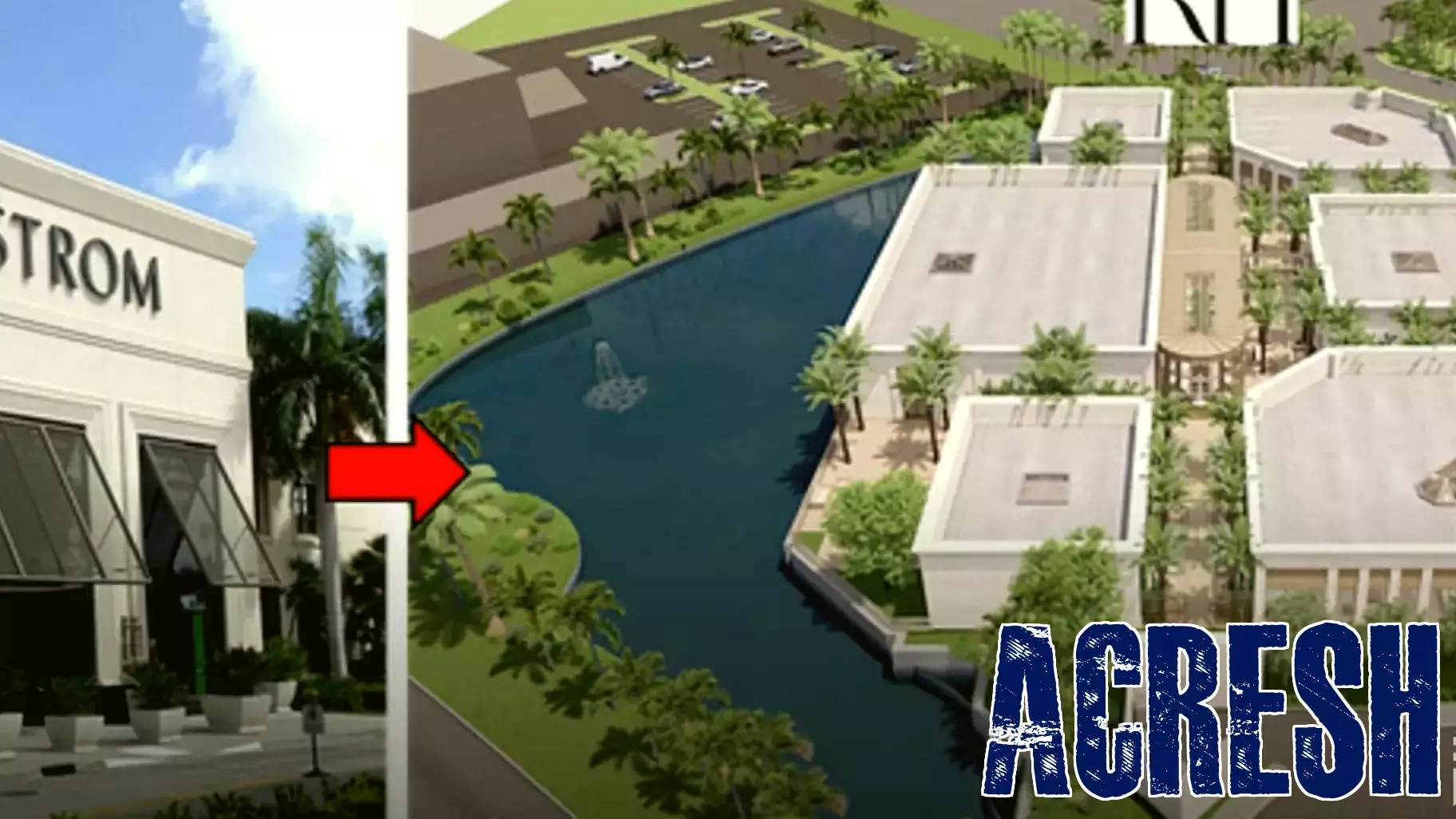
The major real estate takeaway from the recent RH earnings call was the company's decision to move away from large, multi-story galleries in favor of single-story, multi-building compounds. This shift will begin with two new properties opening next year in Naples and Aventura, Florida, both situated on redeveloped mall sites.
The Naples location will replace a roughly 75,000 square foot former Nordstrom store at Waterside Shops. The new compound will offer just 30,000 square feet of retail space distributed across six separate single-story buildings. These structures will be linked by landscaped courtyards, glass-roofed walkways, and outdoor spaces featuring fountains and palm trees. A 4,000 square foot restaurant and wine bar will anchor the center.
This approach differs sharply from the grand vertical galleries RH built over the past 15 years, such as the adaptive reuse of a 17th century castle in England or a Palladian-style villa in Indianapolis. Those projects were distinctive but costly, with some galleries reaching 60 million dollars to build and operating expenses running about 1,000 dollars per square foot. Multi-story construction demands deep footings, structural steel, specialized cranes, and elevators.
Single-story compounds can be built with wood framing and tilt-up methods at a fraction of that cost. They are also cheaper to heat, cool, and maintain since they lack non-revenue areas like grand staircases and elevators. The low-density footprint more closely resembles standard utilitarian buildings that landlords and investors can easily repurpose or re-tenant if RH ever leaves, similar to properties operated by AutoZone or Tractor Supply. This makes residual value easier to determine and could encourage sale-leaseback deals.
The tradeoff is that horizontal properties require much more land. That works for vacant department stores and mall parking lots in Florida or low-density suburbs, but not in expensive, supply-constrained urban markets like New York City. RH likely has enough large gallery space in those dense cities already. Future growth will probably focus on smaller markets with cheaper land.
The all-of-the-above strategy, mixing large urban galleries with smaller single-story properties elsewhere, suits RH well. Competitors like Arhaus are moving in the opposite direction, adding 40,000 square foot galleries in places like Pasadena and Charlotte through adaptive reuse of second-generation sites. But RH has a head start since it already holds large sites in hard-to-enter markets, and construction costs have risen considerably since those projects were completed.
MORE NEWS

October 4, 2026 - 21:33
Egypt Moves to Tighten Real Estate Rules with New Developer LawEgypt is preparing to overhaul the regulation of its real estate development market through a draft law establishing the Egyptian Federation of Real Estate Developers and introducing new rules for...

October 4, 2026 - 03:50
XLRE vs. RWO: Which Real Estate ETF Offers Better ValueInvestors looking at real estate exposure have two very different options in XLRE and RWO. One fund keeps its focus on U.S. large-cap properties and charges a 0.08% expense ratio. The other spreads...

October 3, 2026 - 00:43
High Fuel Prices Fail to Cool Demand for Gas Station PropertiesInvestors continue to chase gas station and convenience store real estate even as fuel costs climb, according to new market data. Cap rates for convenience store properties averaged 5.63 percent in...

October 2, 2026 - 03:43
Spotlight TV Features Danet Linares of Blanca Commercial Real EstateIn a recent episode of Spotlight TV, host Emily Zubi sat down with Danet Linares, Executive Vice Chairman at Blanca Commercial Real Estate, for an in-depth conversation covering leadership, the...